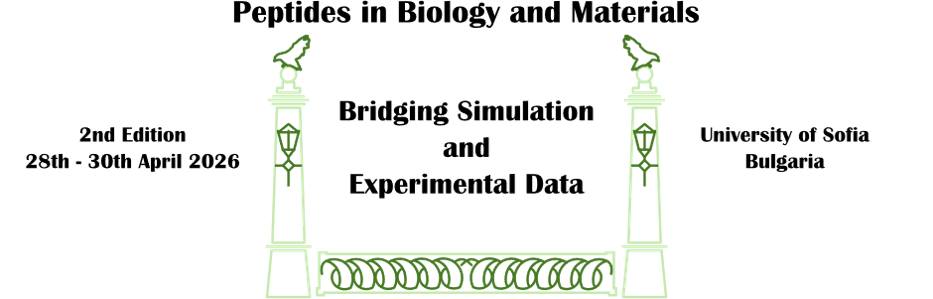
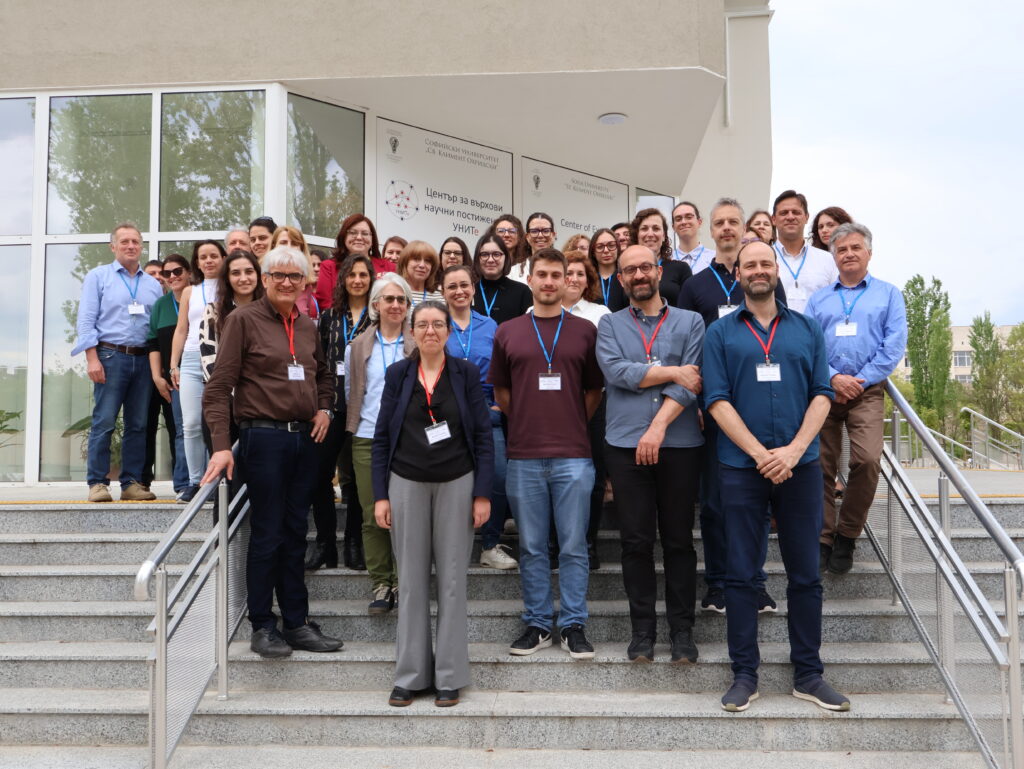
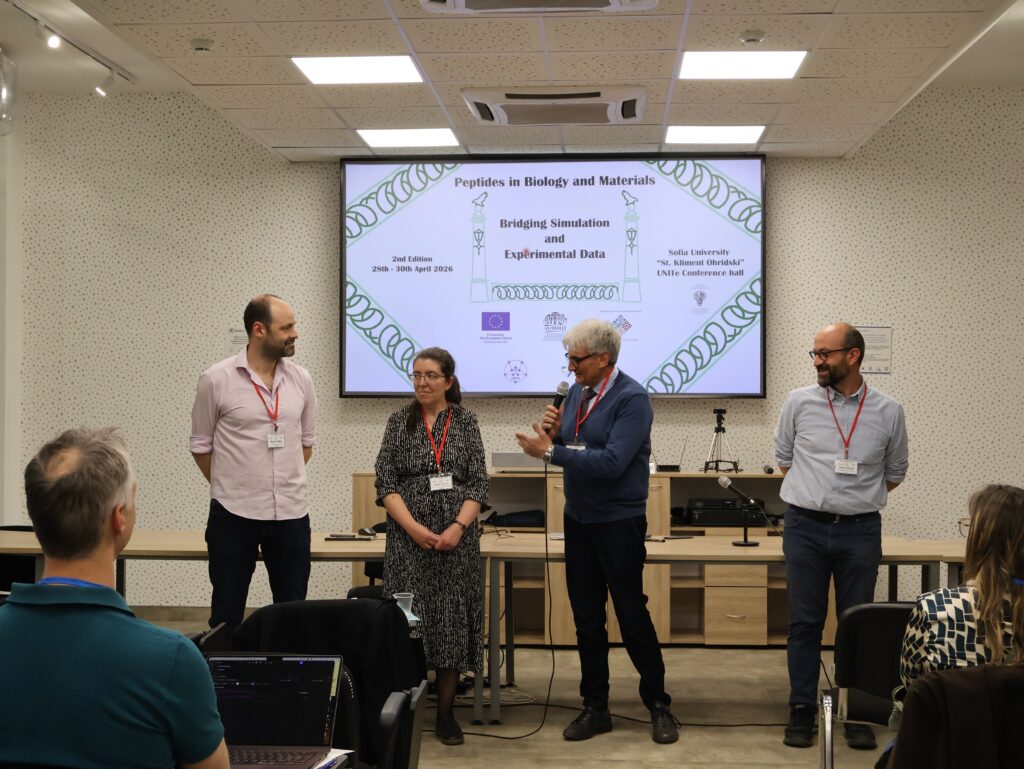
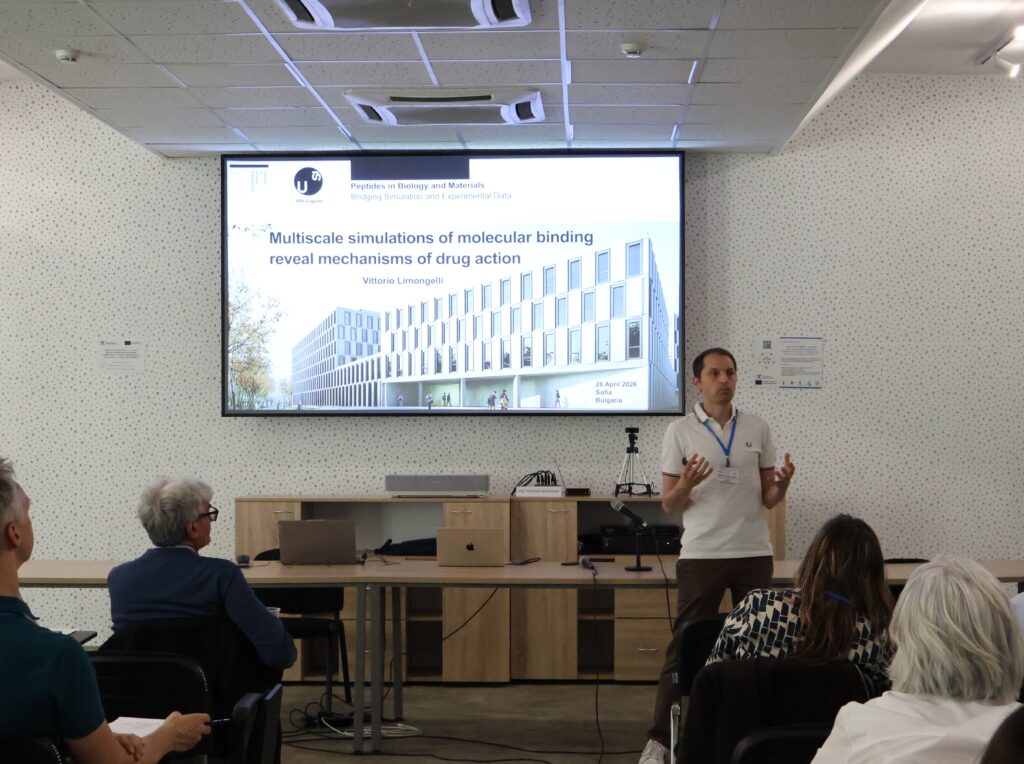
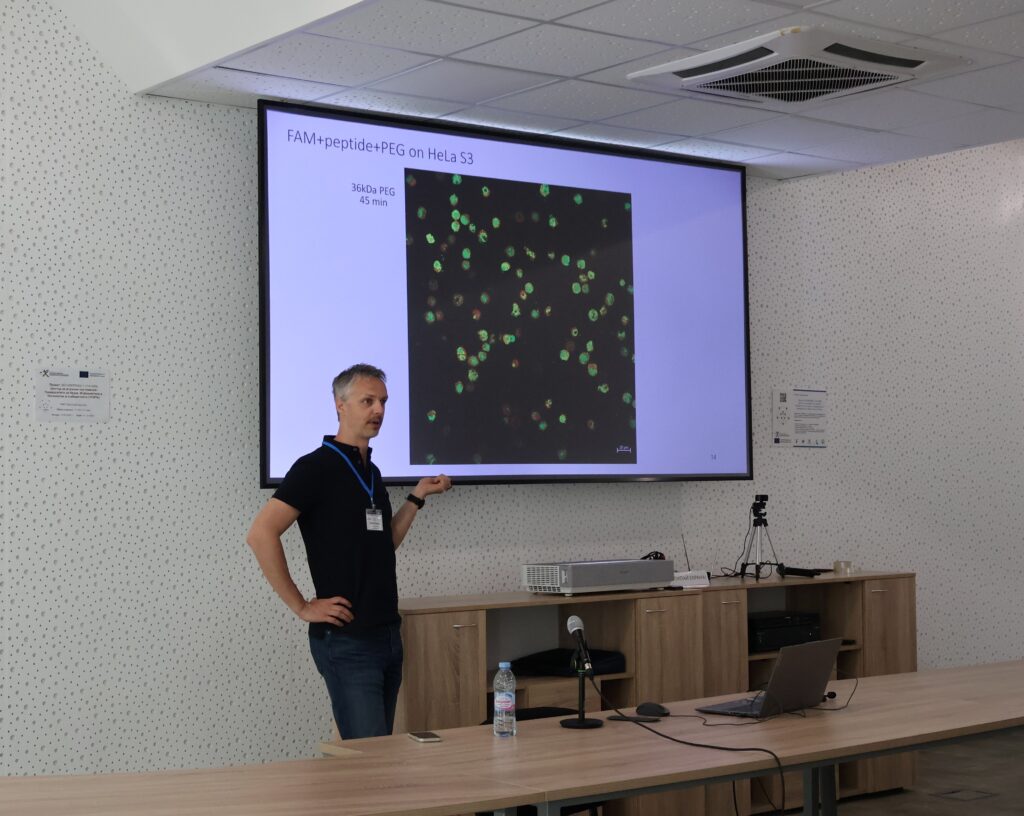
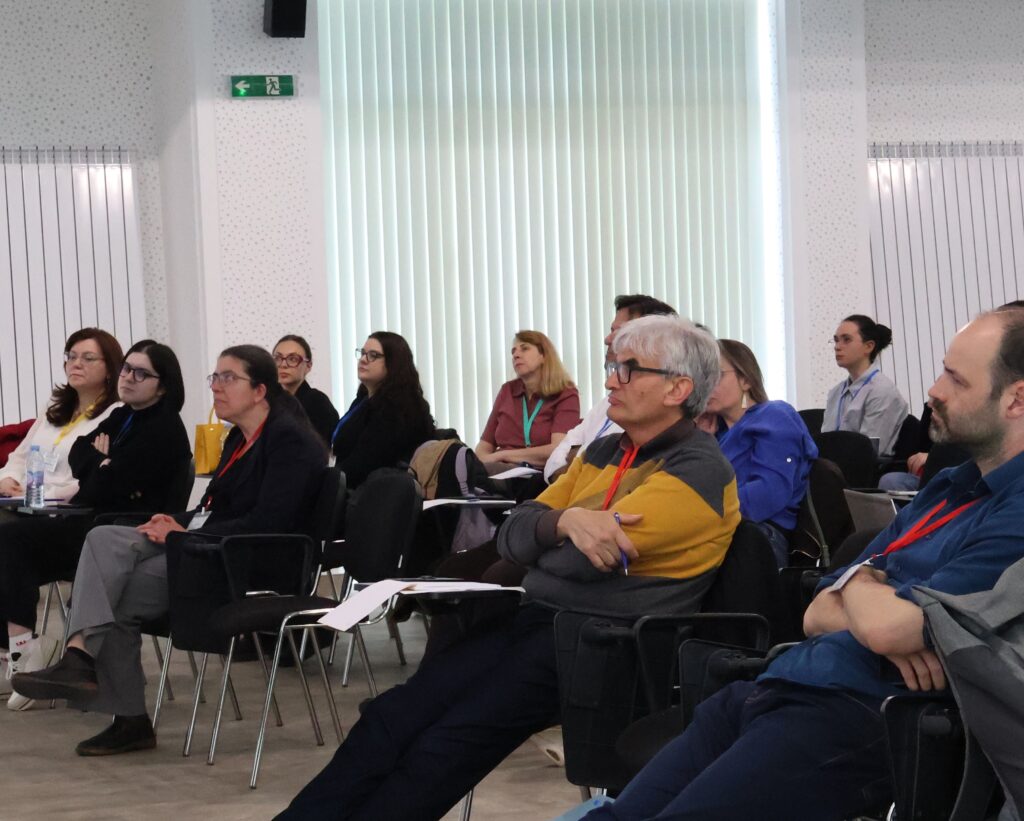
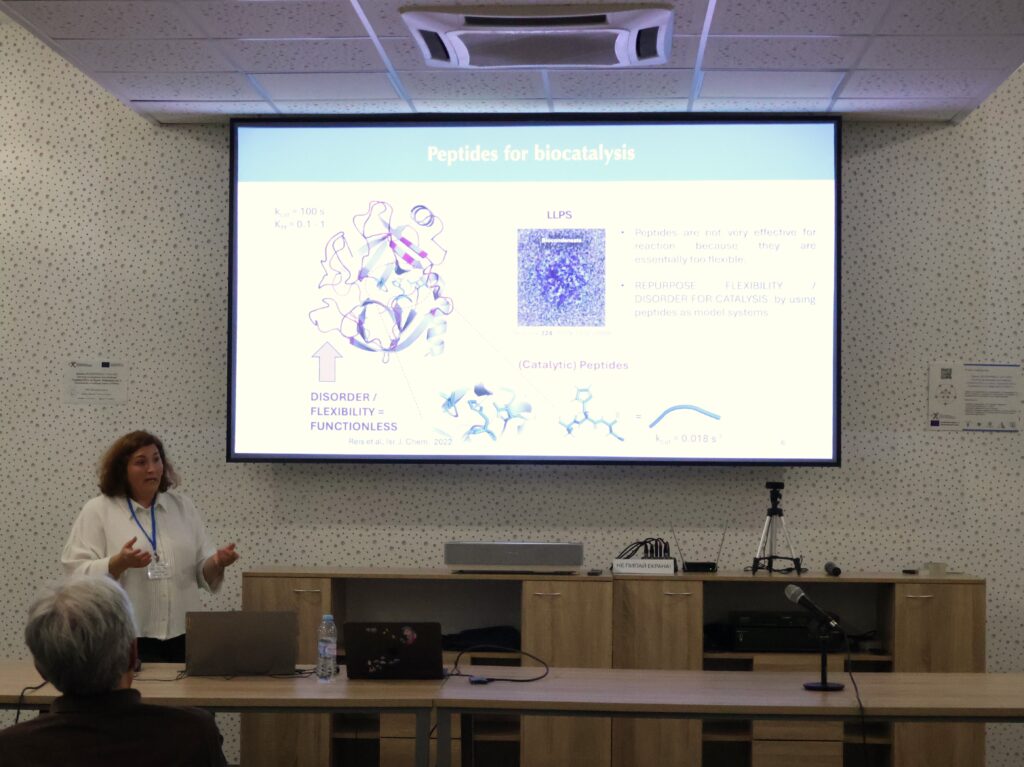
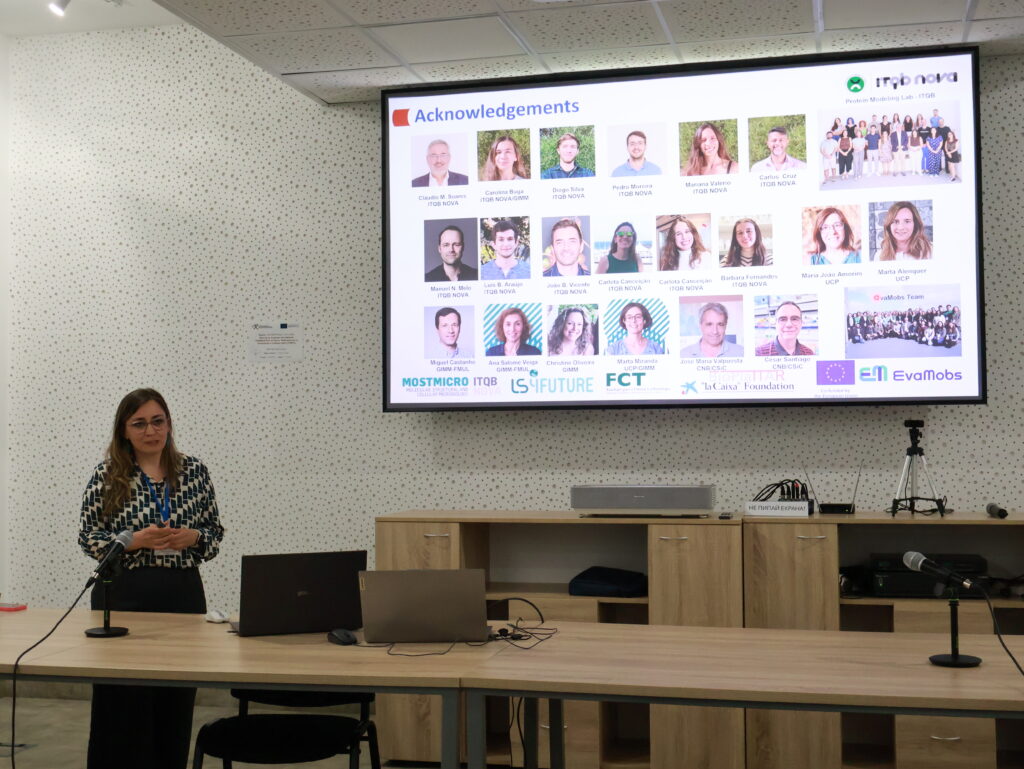
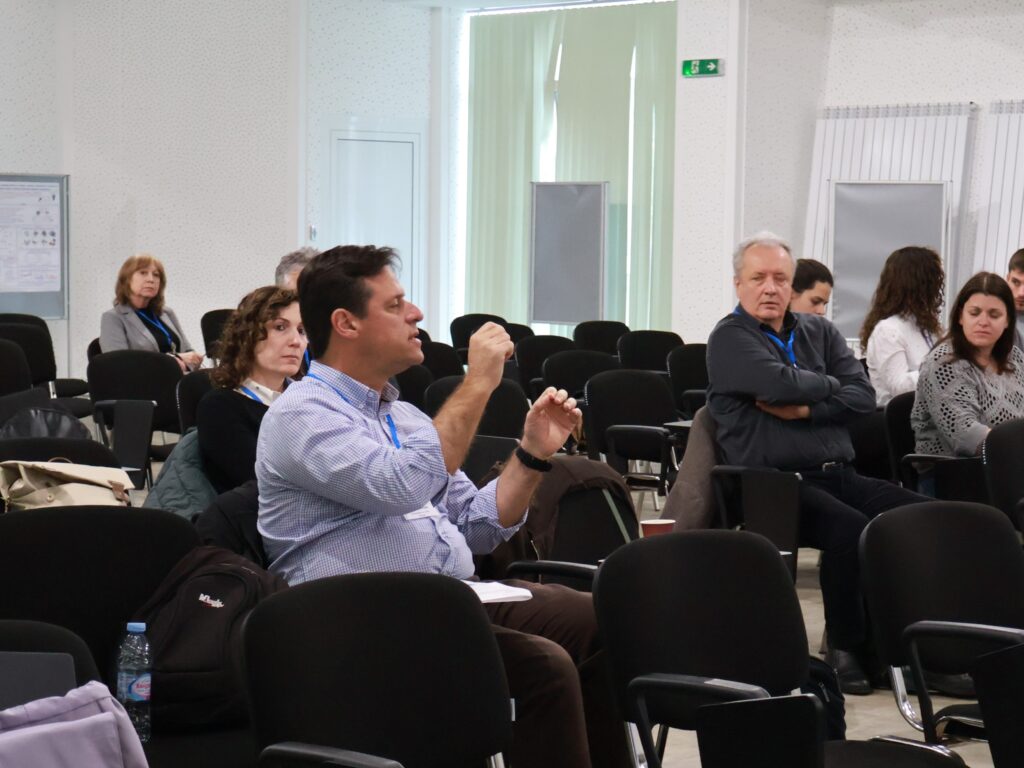
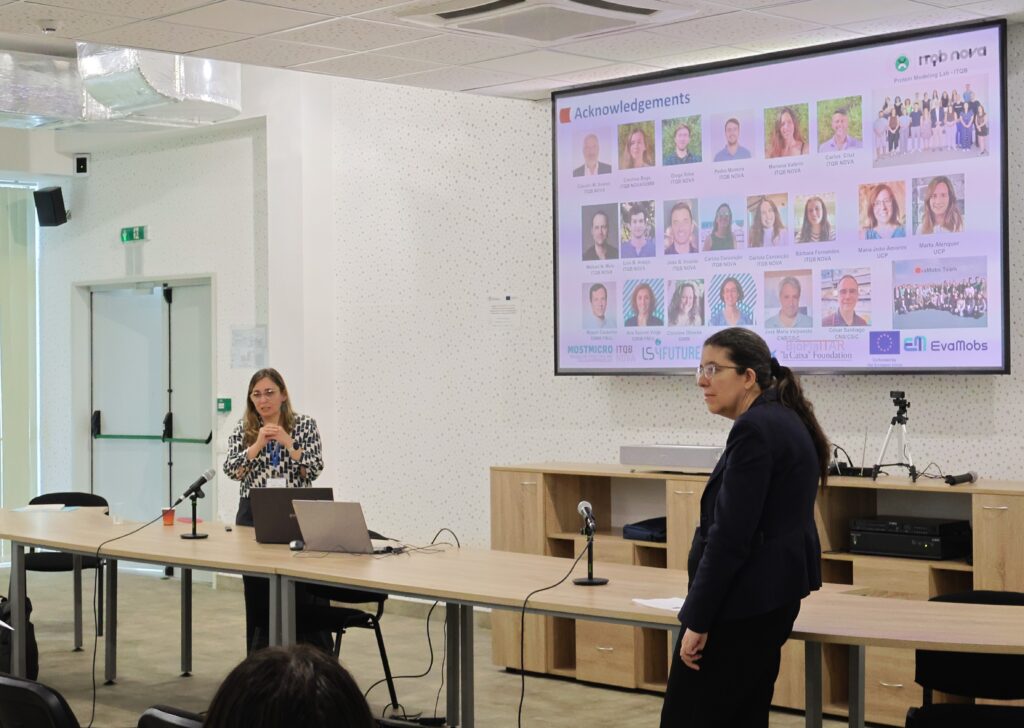
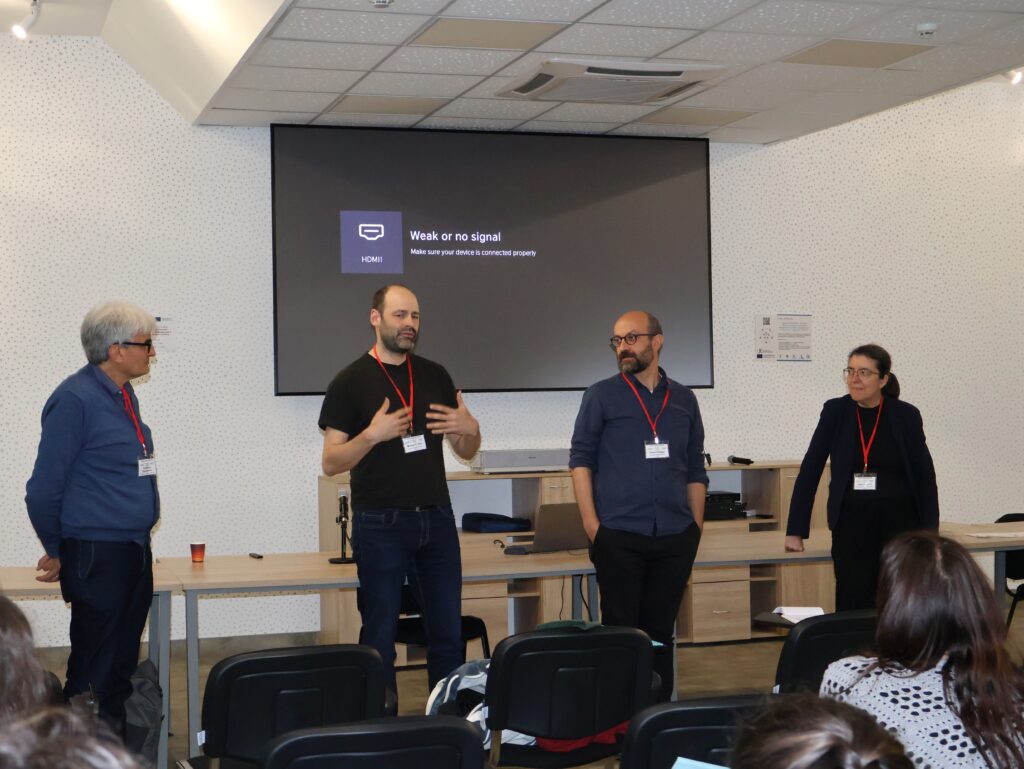
From 28 to 30 April 2026, the second edition of the international seminar ”Peptides in Biology and Materials: Bridging Simulation and Experimental Data”, organized by the Faculty of Chemistry and Pharmacy at Sofia University “St. Kliment Ohridski”, was held in Sofia. The event focused on computational studies of peptides and their connection to experimental methods and practical applications in biology and materials science.
The seminar took place at the UNITe building on the Lozenets campus and brought together scholars and researchers from various international academic institutions, including Burkhard Bechinger (University of Strasbourg), Elka Georgieva (Texas Tech University), Alena Khmelinskaia (Ludwig Maximilian University), Vittorio Limongelli (Università della Svizzera italiana), Diana Lousa and Ana Pina (NOVA University of Lisbon), Daniela Roversi (Tor Vergata University of Rome), Robert Vacha (Masaryk University), Alessandra Villa (Royal Institute of Technology), and Marta de Zotti (University of Padova).
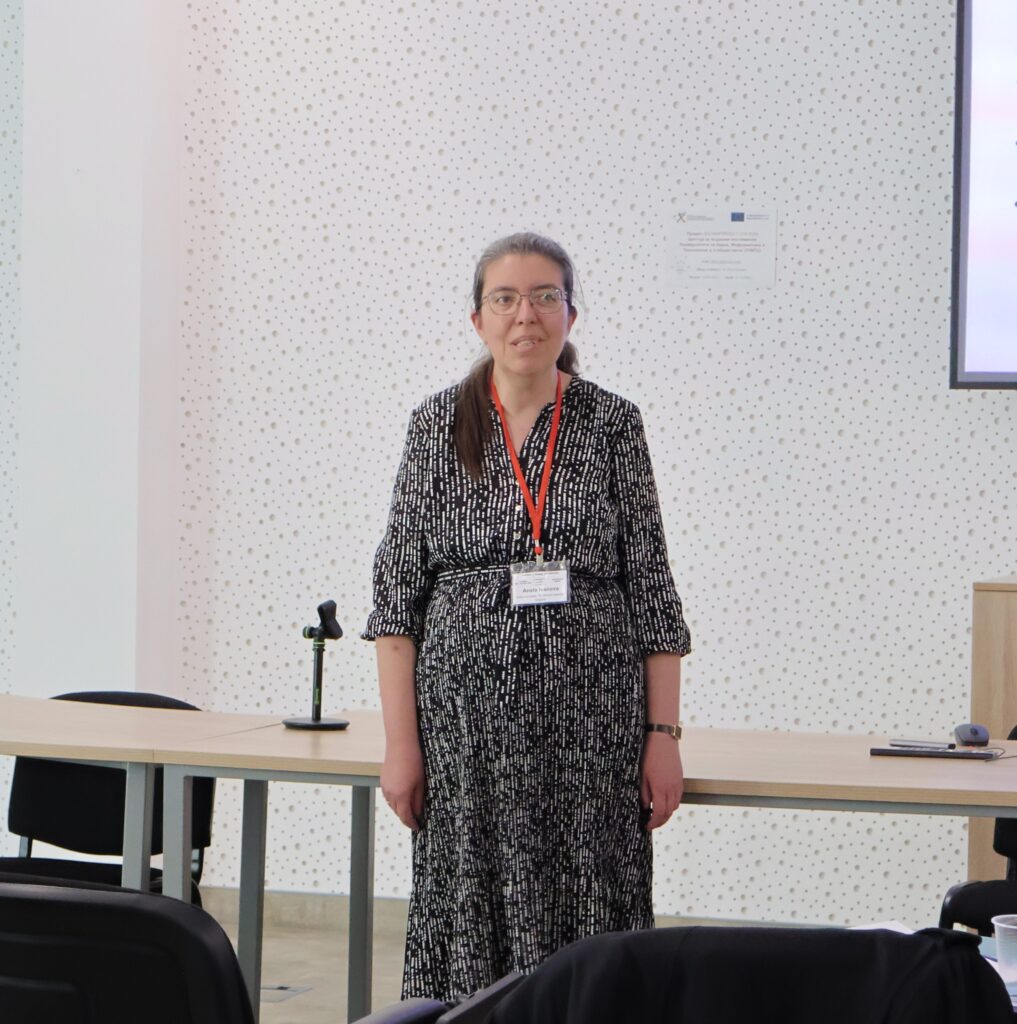
The Organizing committee included Prof. Gianfranco Bocchinfuso and Dr. Paolo Calligari from Tor Vergata University of Rome, Prof. Dr. Anela Ivanova from Sofia University St. Kliment Ohridski, and Dr. Manuel N. Melo from the Institute of Chemical and Biological Technologies at the NOVA University of Lisbon. Among the main objectives of the workshop were to promote the exchange of knowledge among computational biophysicists, bioinformaticians, and experimentalists, as well as to demonstrate the effectiveness of combined computational and experimental approaches in the study of peptide-based systems.
The program covered topics related to peptide design, including the use of machine learning and computational methods, bioactive peptides, peptide-based materials, cell membranes, and functionalized nanoparticles. Special emphasis was also placed on the participation of young scientists and on strengthening the links between theoretical models and experimental research.
This was the second time the seminar was held; its inaugural edition in 2024 was organized as a satellite event to the European Peptide Symposium. This edition built upon that initiative with a stronger focus on interdisciplinary collaboration and the application of modern methods in the field of peptide research.
The event was funded under the National Recovery and Resilience Plan of the Republic of Bulgaria through Project No. BG-RRP-2.004-0008 SUMMIT, with all participation costs covered by the project. In partnership with Frontiers in Chemical Biology, participants were given the opportunity to publish their scientific results free of charge in a special thematic issue.