Results and Outlook from the SHAPES Project Research

STEM education is establishing itself as one of the leading contemporary trends in education, bringing together disciplines from the natural sciences, technology, engineering, and mathematics. As the concept has expanded, other fields – most notably the arts – have often been included, leading to the use of the term STEAM. STEM education makes extensive use of innovative methods that integrate knowledge from various subjects into a common learning context. This approach places students in an active role and helps develop a range of skills, such as critical thinking, innovation, problem-solving, and effective communication.
Over the past five years, STEM education in Bulgaria has seen rapid growth. A number of schools have already established STEM centers or specialized classrooms, and it is expected that such centers will be set up in all municipal schools over the next few years. At the same time, teachers are being trained to use innovative teaching methods, and modern educational resources are being developed.
The goal of the SHAPES project (shapesproject.eu) is to examine the implementation of these methods both in Bulgaria and around the world, and to help identify and disseminate best practices in the field of STEM education.
The project launched at the end of 2023 and is scheduled to run through the end of 2027. As part of the project, a survey is being conducted among teachers in Bulgaria to assess the current state of STEM education in the country. Based on the collected data, recommendations will be formulated for the more effective implementation of STEM methods through their optimization and personalization.
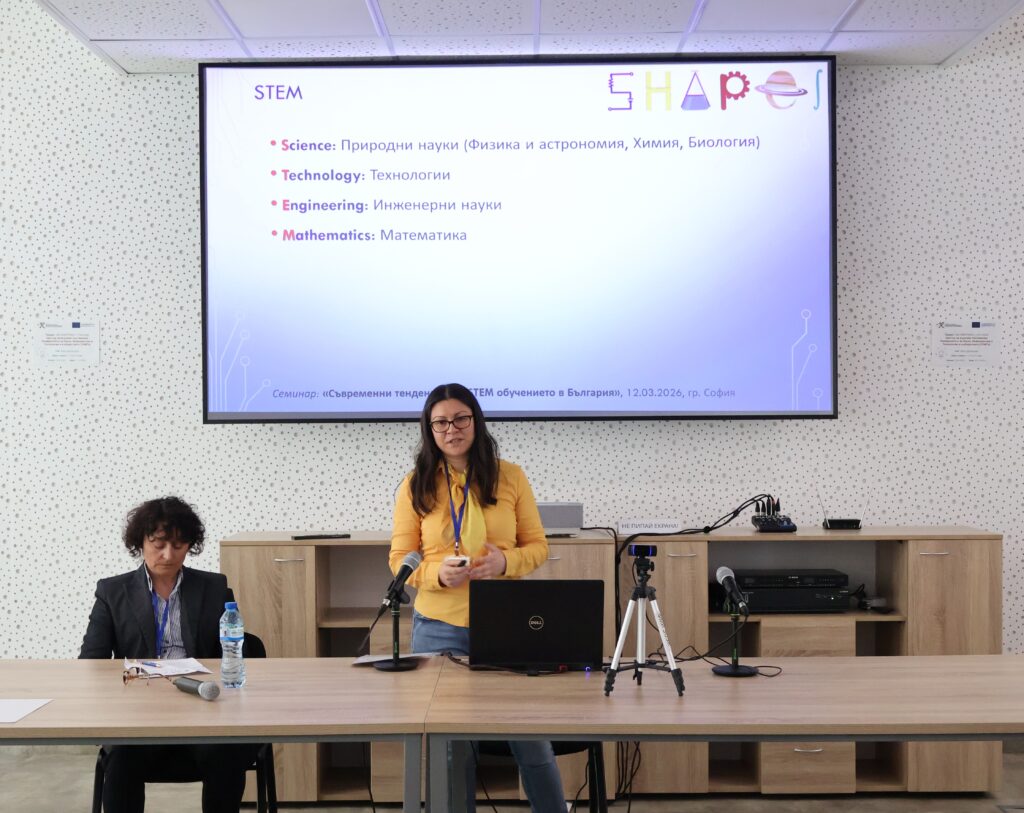
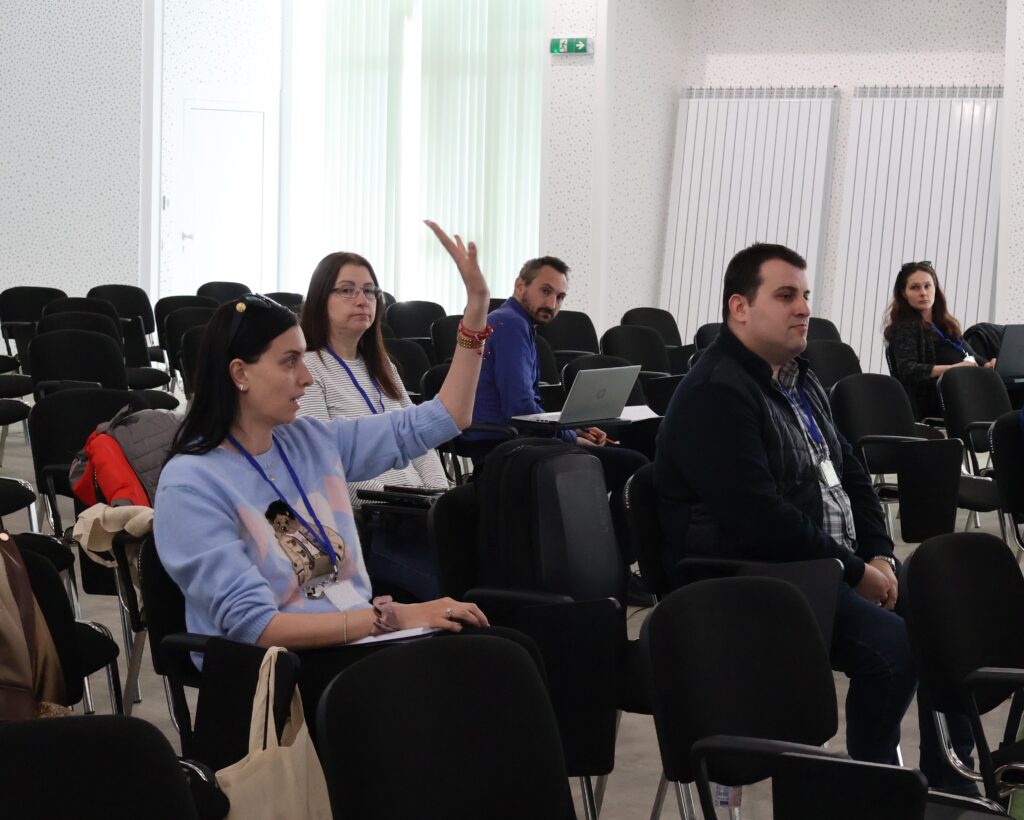
At the seminar held on March 12, 2026, at the Center of Excellence UNITe, preliminary data from the surveys conducted in Bulgaria were presented. To ensure the accuracy of the findings, the questionnaires are being distributed to as many respondents as possible. In this regard, gathering a diverse range of opinions is essential for formulating well-founded conclusions and recommendations.
Associate Professor Elena Paunova-Hubenova, Ph.D., from the Institute of Information and Communication Technologies at the Bulgarian Academy of Sciences, presented a study conducted as part of the SHAPES project, focusing on current trends in STEM education in Bulgaria and opportunities for its optimization and personalization.
It was emphasized that STEM education brings together the natural sciences, technology, engineering, and mathematics; it is characterized by interdisciplinarity, a practical focus, and innovative methods, and it develops skills such as critical thinking, teamwork, and adaptability.
The SHAPES project aims to analyze existing practices, compare them with international experience, and develop models for assessment, optimization, and personalization through research and data analysis. The results are expected to contribute to improving the effectiveness of the learning process, developing innovative strategies, and better alignment with European trends in the digitization of STEM education.
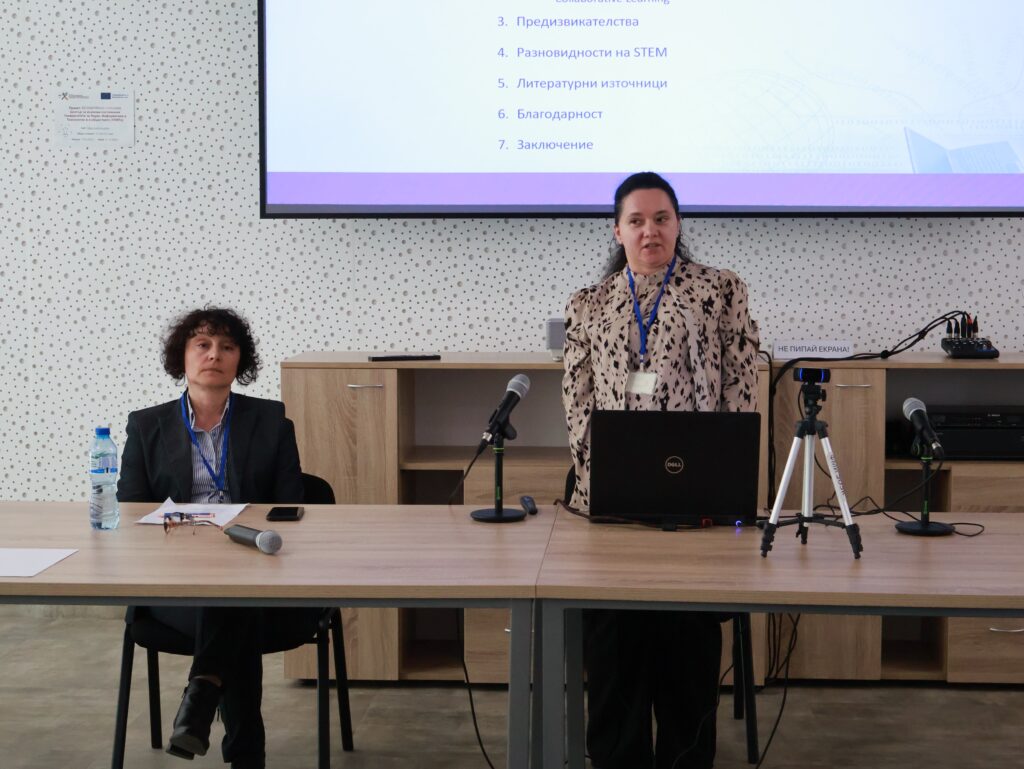
Senior Assistant Professor Dr. Yordanka Boneva presented innovative teaching approaches aimed at encouraging more active student participation and the development of key skills. Among the main models, project-based and inquiry-based learning stand out; these place students at the center of the learning process and foster critical thinking and independence, complemented by the flipped classroom, in which learning takes place outside the classroom, and class time is used for practical application and discussions. Game-based methods, including game-based learning and gamification, boost motivation through interactivity but require a careful balance. An integrated approach brings together STEM disciplines and helps students understand them in a real-world context.
Collaborative learning enhances teamwork and communication, although it poses challenges when it comes to assessment. These approaches mark the transition toward a more interactive, practice-oriented, and adaptive STEM education that meets the demands of modern society.
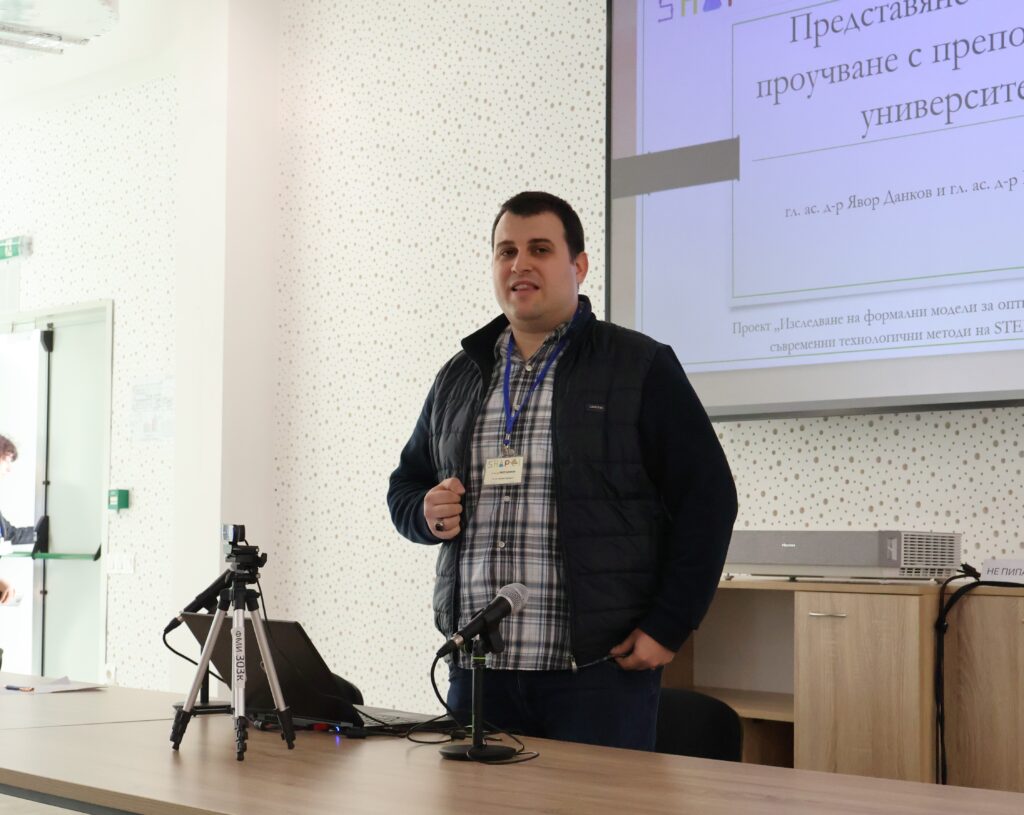
A survey targeting university professors in STEM disciplines in Bulgaria was presented by Senior Assistant Professor Dr. Yavor Dankov and Senior Assistant Professor Dr. Edita Jambazova. The survey was conducted via an online questionnaire among university faculty members nationwide, comprising 27 questions – both closed-ended and open-ended. Its aim is to collect representative data on teaching methods, the use of innovative technologies, and opportunities for optimizing and personalizing the learning process. The survey is structured into thematic sections covering teacher profiles, innovative approaches, and the effectiveness of instruction. The collected data will be analyzed within the SHAPES project and will serve to develop models and recommendations aimed at improving STEM education and the role of digital technologies in Bulgarian universities.
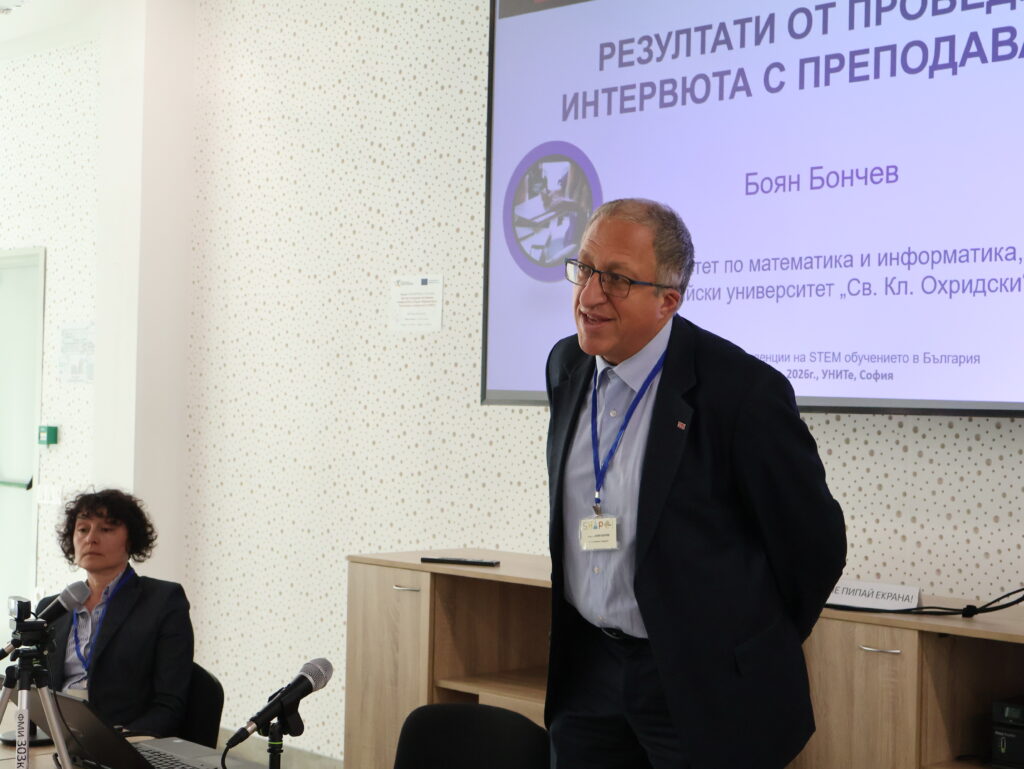
Prof. Dr. Boyan Bontchev from the Faculty of Mathematics and Informatics at Sofia University “St. Kliment Ohridski” presented the results of interviews conducted with university teaching staff, aimed at analyzing the current state and prospects of STEM education.
The study includes 32 faculty teachers, predominantly from state universities, who primarily teach in bachelor’s and master’s programs. The analysis focuses on teaching conditions, the methods used, and future directions for development. The results show that project- and problem-based learning, as well as the integrated (engineering) approach, are the most widely applied. At the same time, methods such as gamification and learning through video games are used to a significantly more limited extent. In terms of teaching practices, traditional forms such as lectures, lab exercises, and the development of projects and presentations dominate, while technologies such as virtual and augmented reality still find limited application.
Among the main challenges are a shortage of resources, insufficient STEM qualifications among teachers, and a lack of well-equipped laboratories, with about half of them citing a need for additional training. The main prospects include greater personalization of education and more active implementation of digital technologies, including artificial intelligence.
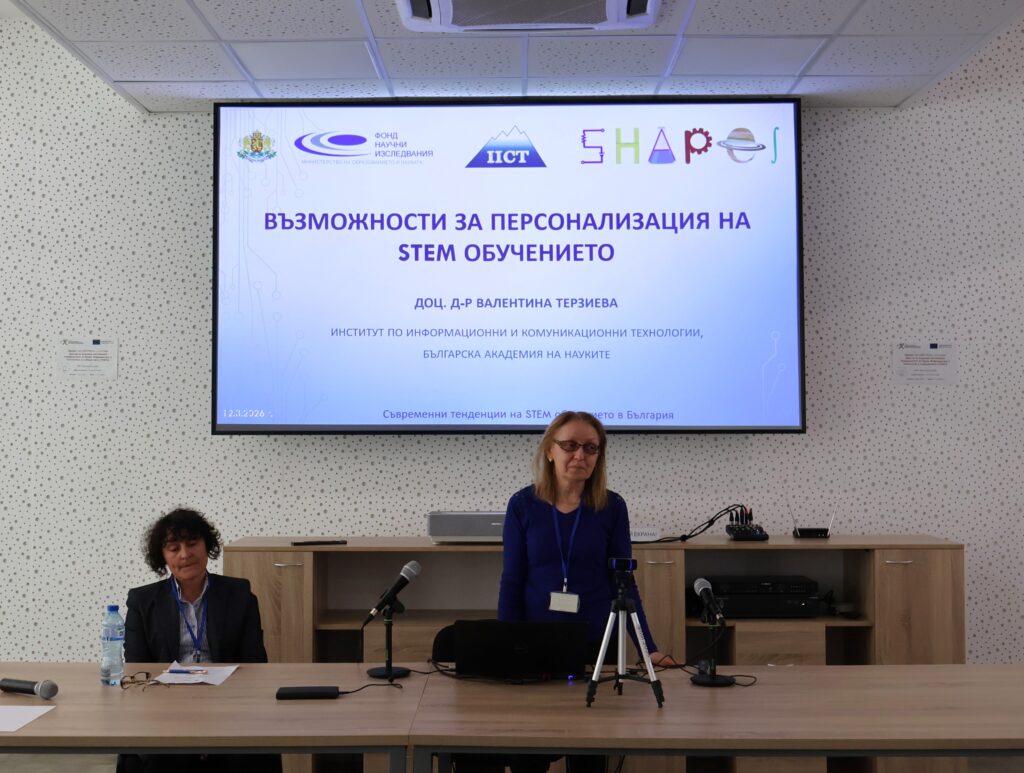
The possibilities for personalizing STEM education and its role in enhancing the effectiveness of the learning process were the focus of a presentation by Associate Professor Valentina Terzieva, Ph.D., from the Institute of Information and Communication Technologies at the Bulgarian Academy of Sciences.
The presentation emphasized that personalized learning is an approach focused on learners’ individual needs, interests, and learning styles, placing them at the center of the educational process. This model fosters deeper engagement by adapting the content, methods, and pace of instruction to the specific learner. The discussion covered key approaches to personalization, including individualized instruction tailored to learners with specific needs, differentiated instruction through grouping by ability or interest, and personalized learning, in which learners actively participate in setting their own goals and educational path.
Particular attention was paid to the practical implementation of personalization through the adaptation of learning resources, the use of various forms of feedback – including AI-supported feedback – and the selection of appropriate strategies based on learners’ profiles. Distinctions were made between static, dynamic, and blended models of personalization. Expert opinions from teachers and university professors were presented, indicating that personalization is most commonly applied when working with groups of varying skill levels, as well as in individual and team projects. It was emphasized that personalization is particularly effective for complex tasks and in dynamic learning environments. In conclusion, it is noted that personalized STEM education contributes to a more flexible and effective educational process.
Summarising, the results presented highlight STEM education as a rapidly evolving field in which innovative methods and a personalized approach play a key role in enhancing the effectiveness of the educational process.
The SHAPES project contributes to the systematic study and optimization of these practices, creating a foundation for better alignment between education and the demands of today’s technological society.
If you are a university lecturer or teacher, you can participate in the SHAPES project study by completing the survey and contribute to the development of STEM education in Bulgaria.
For university lecturers:
https://forms.gle/9ZyzRkNU3XeNrLaj9
For teachers:
https://forms.gle/SFCa2y6qKEpc7kAk6